

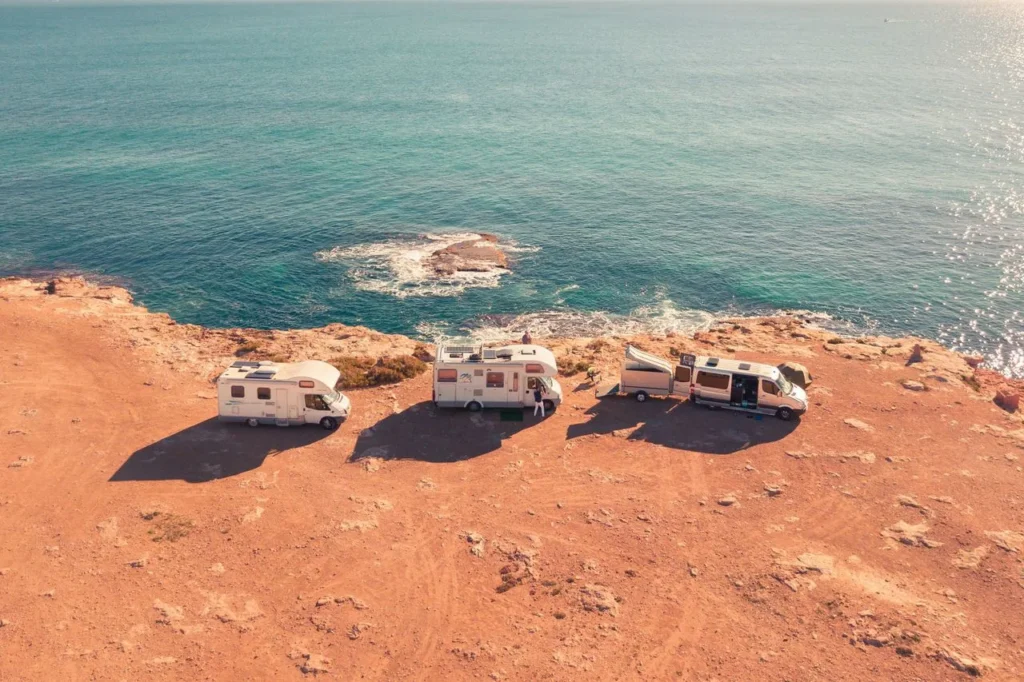
Last updated: July 18, 2026
Quick Answer: The best RVs for beach camping are lightweight aluminum-framed travel trailers and compact Class C motorhomes with enclosed underbellies, sealed storage compartments, and corrosion-resistant hardware. No RV is fully “salt-water proof,” but models built with galvanized steel frames, aluminum exteriors, and minimal exposed raw metal hold up significantly better near the ocean. Regular rinsing and annual protective coatings are just as important as the RV you choose.
Key Takeaways
- Salt air, sand, and humidity accelerate corrosion on any RV, but aluminum-framed and galvanized-steel models resist damage far longer than standard steel builds.
- No industry-wide certification exists for “salt-water resistant” RVs; buyers must evaluate individual construction features rather than marketing labels. [1]
- Enclosed underbellies are one of the most important features to prioritize for coastal camping because they protect wiring, plumbing, and frame components from salt spray.
- Travel trailers in the 20-to-28-foot range offer the best balance of coastal durability, easy towing to beach campgrounds, and manageable maintenance.
- After every beach trip, rinse the undercarriage with low-pressure fresh water and let it dry completely before storage. [1]
- Class C motorhomes work well for families who want self-contained coastal camping without the hassle of towing.
- High-pressure washing the undercarriage can drive salt deeper into seams and brackets, making corrosion worse, not better. [1]
- Budget for annual undercarriage coating treatments if you camp near the ocean more than a few times per year. [1]
- The smallest practical RV for solo or couple beach camping is a well-sealed cargo van conversion or a teardrop trailer with aluminum construction.
- Good RV insurance that covers coastal environments is worth reviewing before your first beach trip; see our guide to the best RV insurance companies for current options.

Why Beach Camping Is a Different Challenge for RVs
Beach camping puts stresses on an RV that inland camping simply does not. Salt air corrodes metal faster than almost any other environment. Blowing sand works its way into slide-out seals, door hinges, and ventilation systems. High coastal humidity promotes mold inside cabinets and under mattresses. And if you camp close to the waterline, salt spray can reach the undercarriage directly.
The result is that an RV that performs flawlessly in the mountains or desert can develop serious rust, seal failures, and mechanical problems within a couple of seasons of regular coastal use if it is not built or maintained for that environment.
When researching the best RVs for beach camping: salt-water resistant models compared side by side, the key is to look past marketing language and focus on specific construction details. The sections below break down exactly what to look for and which RV types handle coastal conditions best.
What Makes an RV Salt-Water Resistant?
A salt-water resistant RV is one built with corrosion-resistant materials throughout its frame, exterior skin, hardware, and undercarriage, combined with good sealing to keep moisture and salt particles out of structural components. No RV on the market carries a formal “salt-water resistant” certification, so buyers need to evaluate each model feature by feature. [1]
Here are the construction details that matter most:
- Aluminum frame or galvanized steel frame: Aluminum does not rust. Galvanized steel resists rust far longer than bare steel. Either is a strong choice over standard steel tubing.
- Aluminum exterior skin: Fiberglass is also good, but aluminum skins with proper sealing resist pitting and corrosion better than painted steel panels.
- Enclosed underbelly: A fully enclosed underbelly (also called a “heated underbelly” on four-season models) wraps the entire underside in a protective shell, shielding wiring, plumbing, and frame rails from salt spray. [1]
- Stainless steel or marine-grade hardware: Hinges, latches, screws, and brackets should be stainless steel or coated with a marine-grade finish. Zinc-plated hardware corrodes quickly in salt air.
- Sealed slide-out seals and door gaskets: Tight seals keep salt particles and humidity from infiltrating the interior and the slide-out mechanism.
- Minimal exposed raw steel: Look underneath the RV. If you see bare steel brackets, axles with no coating, or exposed weld points, those are future rust spots.
“Even RVs marketed as ‘off-road’ or ‘coastal ready’ still rely on regular cleaning and recoating. There is no widely recognized industry standard that certifies an RV as fully salt-water resistant.” [1]
Best RV Types for the Coast: A Practical Comparison
For most beach campers, a lightweight travel trailer or a compact Class C motorhome offers the best combination of coastal durability, ease of use, and value. The right choice depends on your travel style, budget, and how close to the water you plan to camp.
Travel Trailers
Travel trailers in the 20-to-28-foot range are the most popular choice for beach camping. They are easier to tow to coastal campgrounds, simpler to rinse and maintain, and available in a wide range of price points. Brands like Airstream (all-aluminum construction), Lance, and Outdoors RV use aluminum-heavy builds that hold up well near salt water.
Choose a travel trailer if: You want lower entry cost, easy detachability so your tow vehicle stays clean, and a wide selection of floor plans.
Class C Motorhomes
Class C motorhomes offer self-contained living with a cab-over sleeping area, which families tend to prefer. Their fiberglass front caps and aluminum-sided bodies handle coastal humidity reasonably well. The downside is that the engine compartment and chassis are exposed to salt air, so undercarriage maintenance is more involved.
Choose a Class C if: You want an all-in-one unit, travel with children, and plan to stay at established beach campgrounds with hookups. For a deeper comparison, our Class C motorhome guide covers top-rated models in detail.
Van Conversions and Cargo Vans
Smaller van builds (Mercedes Sprinter, Ford Transit, Ram ProMaster) are gaining popularity for coastal camping because their lower profile reduces wind exposure, and their sealed unibody construction has fewer exposed seams than traditional RVs. They are also easier to park at beach access points.
Choose a van if: You are a solo traveler or couple who wants maximum mobility and minimal maintenance footprint near the ocean.
Fifth Wheels
Fifth wheels offer the most living space but require a full-size pickup truck, which adds another vehicle to protect from salt air. Their height also makes them more susceptible to coastal wind. They work best for long-stay coastal camping rather than frequent short trips. See our best RV fifth wheels guide for current top-rated models.

Class A vs Class C for Beach Camping: Which Is Better?
For most beach campers, a Class C motorhome is the better choice over a Class A. Class A coaches are larger, heavier, and harder to maneuver into coastal campgrounds, many of which have tight access roads and limited site lengths. Their greater surface area also means more exterior to maintain after salt exposure.
Class C motorhomes, typically ranging from 20 to 33 feet, fit more beach campground sites, cost less to purchase and fuel, and have simpler undercarriages to rinse and inspect. Their cab-over construction keeps more of the living area elevated above salt-spray height.
The exception: If you plan to stay at a large, full-hookup coastal resort for weeks at a time and rarely move, a Class A’s superior comfort and living space may justify the extra maintenance effort. For resort-style coastal stays, check our list of best RV resorts for top-rated beachside options.
Can You Take a Regular RV to the Beach?
Yes, you can take a standard RV to the beach, but you should expect accelerated wear on metal components, seals, and hardware if you do not take protective steps. A “regular” RV with a standard steel frame and zinc-plated hardware will develop rust and corrosion faster in a coastal environment than an aluminum or galvanized-frame model.
The risk is not immediate. A single weekend trip near the ocean will not destroy a standard RV. The damage accumulates over multiple seasons of salt exposure without proper rinsing and maintenance. Buyers who plan to camp at the beach more than three or four times per year should strongly consider an aluminum-framed model from the start.
Common mistake: Many first-time beach campers assume that because their RV looks fine after a coastal trip, no damage occurred. Salt corrosion works invisibly inside seams, brackets, and behind panels before it becomes visible on the surface.
Do I Need a Special RV for Salt-Water Exposure?
You do not need a purpose-built “coastal RV,” but you do need to choose construction features carefully and commit to a regular maintenance routine. The good news is that several mainstream RV models already include enough corrosion-resistant features to handle regular beach use with proper care.
Key features to prioritize when shopping:
- Aluminum or galvanized steel frame (not standard steel)
- Enclosed underbelly with no exposed plumbing or wiring
- Stainless steel exterior hardware
- Tight slide-out seals (test them in the showroom)
- Fiberglass or aluminum exterior skin (not painted steel panels)
Manufacturers are increasingly offering optional corrosion-protection packages and partnering with local service centers for ongoing undercarriage maintenance on beach-used RVs, so ask your dealer about these add-ons before you buy. [1]
How Much Does a Salt-Water Resistant RV Cost?
A beach-capable RV with aluminum construction and enclosed underbelly typically starts around $25,000 to $35,000 for a used model and $40,000 to $80,000 or more for a new travel trailer. Prices vary widely based on brand, size, and features.
Here is a rough breakdown by category:
- Budget aluminum travel trailers (new): $30,000 to $50,000. Brands like Lance 1685 or the Airstream Bambi 16RB fall in this range.
- Mid-range Class C motorhomes (new): $80,000 to $130,000. Models like the Thor Motor Coach Quantum or Winnebago Minnie Winnie offer decent coastal durability.
- Van conversions (new factory builds): $60,000 to $120,000 depending on conversion quality.
- Premium aluminum travel trailers (Airstream, new): $70,000 to $150,000+.
For buyers on a tighter budget, a well-maintained used aluminum travel trailer can be a smart coastal investment. Our best used RVs under $25K guide covers what to inspect before buying used near the coast.
What RV Features Matter Most at the Beach?
Beyond corrosion resistance, the features that matter most for beach camping are easy-clean interiors, sealed exterior storage, good airflow and ventilation, and adequate ground clearance. Sand gets into everything, and coastal humidity makes mold a real concern inside the living space.
Interior features to prioritize:
- Vinyl or tile flooring (not carpet) for easy sand cleanup
- Solid-surface countertops that resist moisture
- Ventilation fans with adjustable speed settings
- Dehumidifier-ready electrical outlets or a built-in dehumidifier
Exterior features to prioritize:
- Sealed, gasketed storage compartments (sand and moisture stay out)
- Outdoor shower with a dedicated rinse station for gear and feet
- Awning with wind sensors (coastal winds can shred an unsecured awning)
- Adequate ground clearance if you plan to drive on soft sand (at least 8 inches recommended for beach driving)
Tire considerations: Standard RV tires are not designed for soft sand. If you plan to drive onto the beach itself, check local regulations first, reduce tire pressure appropriately for sand driving, and carry a portable air compressor to re-inflate before returning to pavement.

Smallest RV Suitable for Beach Camping
The smallest practical RV for beach camping is a well-sealed teardrop trailer or a compact cargo van conversion, both of which can be under 20 feet and weigh under 3,500 pounds. Their small footprint makes them easier to park at coastal access points and simpler to rinse after a salty trip.
For solo travelers or couples, a teardrop trailer with an aluminum skin (brands like nuCamp Tab, Little Guy, or Airstream Bambi) offers genuine corrosion resistance in a very compact package. These trailers typically weigh between 1,800 and 3,500 pounds and can be towed by most midsize SUVs.
Van conversions are the next step up. A Mercedes Sprinter or Ford Transit conversion gives you sleeping, cooking, and storage in a sealed unibody package that handles salt air better than most framed RVs.
Edge case: Pop-up campers are the lightest option, but their canvas or vinyl walls are not well-suited to coastal humidity and salt air. Mold and seal degradation happen quickly. I would not recommend a pop-up for regular beach use.
RV Freshwater vs Saltwater Tank Systems Explained
Standard RV freshwater tank systems are designed for potable water only and are not connected to or affected by saltwater exposure, but the external plumbing fittings, valves, and tank brackets can corrode if they are exposed to salt spray without protection.
Here is what you need to know:
- Freshwater tanks are typically polyethylene or ABS plastic and do not corrode. The risk is in the metal fittings, brackets, and drain valves attached to them.
- Gray and black tanks are also plastic, but their external hardware (valves, connectors, gate handles) is often steel or zinc-plated and will corrode with repeated salt exposure.
- Water pump and connections: Stainless steel fittings and marine-grade hose clamps are worth the upgrade if you camp near salt water regularly.
- Outdoor shower lines: If your RV has an exterior shower, rinse the fittings after every coastal trip and apply a light coat of corrosion inhibitor spray to metal connections.
There is no “saltwater tank system” in consumer RVs. The phrase sometimes appears in marketing to mean the RV has been built with corrosion-resistant plumbing hardware, which is a useful feature but not a standardized specification.
RV Rust Prevention Tips for Coastal Camping
The most effective rust prevention strategy for a coastal RV combines low-pressure freshwater rinsing after every beach trip, annual application of a rust-inhibitor coating, and regular visual inspections of the undercarriage. Skipping any one of these steps significantly increases the risk of frame and suspension damage. [1]
Follow this maintenance sequence:
- After each beach trip: Rinse the entire undercarriage with low-pressure fresh water. Focus on frame rails, axle brackets, hitch components, and any exposed steel. Do not use a high-pressure washer, as it can dislodge sealants and drive salt deeper into seams. [1]
- Let it dry completely: Before storing the RV, allow the undercarriage to dry fully. Trapping moisture under the RV accelerates corrosion rather than preventing it. [1]
- Every 2 to 3 weeks during storage near the coast: Rinse the undercarriage again even if you have not used the RV, because salt air deposits accumulate on parked vehicles. [1]
- Annually: Apply a rust-inhibitor or protective undercoating to all exposed metal surfaces. Many coastal RV service centers now offer bundled “undercarriage rust-protection packages” that include flushing, inspection, and coating in a single service visit. [1]
- Inspect seals and gaskets: Check slide-out seals, door gaskets, and roof seams at least twice per year. Coastal UV and salt air degrade rubber seals faster than inland conditions.
- Bearing service: Wheel bearings on travel trailers and fifth wheels should be inspected and repacked more frequently if you camp near salt water, ideally every season rather than every other year.
“Combining regular rinsing, annual coating refresh, and visual inspections as a systematic maintenance plan is essential. Skipping any of these steps notably increases the risk of frame and suspension rust for RVs stored or used near salt water.” [1]
How to Maintain an RV After Beach Trips
Post-beach maintenance is not optional if you want your RV to last. A solid routine takes about 30 to 60 minutes after each coastal trip and prevents the kind of corrosion damage that can cost thousands of dollars to repair.
Post-beach checklist:
- Rinse undercarriage with low-pressure fresh water (avoid high-pressure jets) [1]
- Rinse exterior walls, wheel wells, and hitch assembly
- Sweep out sand from floors, storage compartments, and slide-out tracks
- Wipe down exterior hardware (hinges, latches, locks) with a damp cloth, then dry
- Check slide-out seals for embedded sand and clean with a soft brush
- Inspect roof seams and vent covers for salt residue
- Run the ventilation fans to reduce interior humidity
- Empty and rinse the outdoor shower fittings if equipped
For a broader RV maintenance framework, our RV maintenance and repair guide covers seasonal service schedules that work well for coastal campers.

Common Mistakes People Make Beach Camping in RVs
The most common mistake is assuming that a single beach trip causes no lasting damage. Salt corrosion is cumulative and invisible at first. By the time rust appears on the surface, it has often already progressed through a coating layer and into the base metal.
Other frequent errors:
- Using a high-pressure washer on the undercarriage. This feels thorough but actually dislodges protective sealants and forces salt particles into joints and brackets. [1]
- Storing the RV while the undercarriage is still wet. Trapped moisture under a cover or in a garage accelerates oxidation. [1]
- Ignoring wheel bearings. Salt water and sand are abrasive. Bearings on travel trailers that are towed through sandy beach access roads wear faster than most owners expect.
- Parking too close to the waterline. Even if you do not drive on the beach, parking within 50 feet of active surf exposes the undercarriage to direct salt spray.
- Buying a steel-framed RV because it was cheaper. The initial savings often get erased within two or three seasons of coastal use through repair costs.
- Skipping RV insurance review before coastal trips. Standard policies may not cover salt-corrosion damage. Check your coverage details; our best RV insurance companies guide includes coastal coverage considerations.
How Long Can You Safely Park an RV at the Beach?
You can park an RV at the beach indefinitely as long as you follow a consistent maintenance routine, but the risk of accelerated corrosion increases with every week of continuous coastal exposure without rinsing and inspection. [1]
Practical guidelines:
- Weekend trips (2 to 3 days): Rinse undercarriage once after returning home. Low risk with proper post-trip care.
- Week-long stays: Rinse mid-stay if possible, and do a full post-trip rinse and inspection when you return.
- Month-long or seasonal stays: Rinse the undercarriage every 2 to 3 weeks even when stationary, because salt air deposits accumulate on parked RVs. Schedule a professional undercarriage inspection at the end of the season. [1]
- Full-time coastal living: Treat undercarriage maintenance as a monthly task. Annual professional coating is essential. For full-time coastal RV living options, see our guide to best RV sites for long-term living.
There is no hard cutoff on how long is “too long,” but the combination of continuous salt air exposure, UV radiation, and coastal humidity without regular maintenance will shorten the lifespan of any RV’s frame and mechanical components.
Best RV Campgrounds Near Beaches with Hookups
The best beach-adjacent RV campgrounds with full hookups are typically found within state and national park systems along the Atlantic, Gulf, and Pacific coasts, as well as at private coastal RV resorts. Availability varies significantly by season, and popular sites often require reservations months in advance.
Top regions to search:
- Florida Gulf Coast: Destin, Fort Myers Beach, and the Panhandle have multiple campgrounds with full hook-ups close to the water. Check our RV parks in Destin, Florida guide for specific options.
- California coast: Sites from Malibu to Bodega Bay offer ocean-adjacent camping, though many are dry camping only. See our best RV parking and camping locations guide for current options.
- Outer Banks, North Carolina: Several private parks offer full hookups within walking distance of the beach.
- Pacific Northwest: Oregon’s coast has state park campgrounds with hookups and direct beach access.
When booking, ask specifically about site surface (gravel vs. sand), distance from the waterline, and whether the campground has a freshwater rinse station for RV undercarriages. Some coastal resorts now include this as a standard amenity.
Best RVs for Beach Camping: Salt-Water Resistant Models Compared by Travel Style
The right RV for beach camping depends heavily on how you travel, not just which model has the best spec sheet. Here is a breakdown by travel style:
Families with children:
A Class C motorhome (Thor Quantum, Winnebago Minnie Winnie) or a mid-size travel trailer with bunk beds (Lance 2295, Outdoors RV Timber Ridge) works best. Prioritize easy-clean vinyl floors, sealed storage, and an outdoor shower. Our best family RV guide covers top-rated family models in more detail.
Couples:
A 20-to-24-foot aluminum travel trailer or a van conversion. The Airstream Bambi, nuCamp Tab 400, or a quality Sprinter conversion hits the sweet spot of corrosion resistance and ease of use. See our best RV for couples guide for a full comparison.
Weekend beach campers:
A lightweight aluminum travel trailer under 25 feet is the most practical choice. Easy to tow, quick to set up, and simple to rinse after a salty weekend.
Long-stay coastal users:
A larger travel trailer or fifth wheel with a four-season enclosed underbelly and full hookup capability. Budget for professional undercarriage maintenance every season.
Budget buyers:
A used aluminum travel trailer from a reputable brand (Airstream, Lance, Outdoors RV) bought in the $20,000 to $35,000 range. Inspect the undercarriage carefully before buying. Avoid steel-framed trailers regardless of price.

FAQ
What RV is best for beach camping?
An aluminum-framed travel trailer in the 20-to-28-foot range is the best all-around choice for most beach campers. It offers corrosion resistance, easy towing, manageable maintenance, and a wide range of floor plans. Airstream, Lance, and Outdoors RV are the most consistently recommended brands for coastal use.
Are some RVs more salt-water resistant than others?
Yes. RVs built with aluminum frames, aluminum or fiberglass exterior skins, enclosed underbellies, and stainless steel hardware resist salt corrosion far better than standard steel-framed models. However, no RV carries a formal salt-water resistance certification. [1]
What should I look for in a coastal RV?
Prioritize an enclosed underbelly, aluminum or galvanized steel frame, stainless steel exterior hardware, tight slide-out seals, and vinyl or tile interior flooring. An outdoor shower with a rinse station is also a practical bonus for beach use.
Is aluminum better than steel for beach camping?
Yes, significantly. Aluminum does not rust. A standard steel frame will begin to oxidize within one to two seasons of regular coastal use without aggressive maintenance. Aluminum-framed RVs cost more upfront but save money on repairs over time.
How do I protect an RV from salt air?
Rinse the undercarriage with low-pressure fresh water after every coastal trip, let it dry completely before storage, and apply a rust-inhibitor coating annually. Inspect seals, gaskets, and hardware at least twice per year. [1]
Are travel trailers or motorhomes better for beach trips?
Travel trailers are generally better for beach trips because they are easier to rinse, simpler to maintain, and allow you to unhitch and use your tow vehicle independently. Motorhomes offer more convenience but require more maintenance on the engine and chassis after salt exposure.
Can I drive my RV onto the beach?
Some beaches allow it with a permit, but most RVs are not designed for soft sand driving. If you attempt it, reduce tire pressure for sand traction, carry a portable compressor, and check local regulations first. Driving on wet sand increases salt exposure to the undercarriage significantly.
How often should I rinse my RV after beach camping?
Rinse the undercarriage with low-pressure fresh water after every beach trip. If the RV is stored near the coast, rinse every 2 to 3 weeks even when not in use, because salt air deposits accumulate on stationary vehicles. [1]
Does RV insurance cover salt corrosion damage?
Most standard RV insurance policies exclude gradual corrosion or wear. Review your policy carefully before coastal trips and ask your insurer about endorsements for coastal use. Our best RV insurance companies guide covers what to look for in coastal coverage.
What is an enclosed underbelly and why does it matter for beach camping?
An enclosed underbelly is a protective shell that wraps the entire underside of the RV, covering the frame, plumbing, and wiring. It prevents direct salt spray from reaching structural components and makes the undercarriage easier to rinse and maintain. It is one of the single most important features for coastal RV use. [1]
What is the smallest RV I can use for beach camping?
A teardrop trailer with an aluminum skin (such as the nuCamp Tab or Airstream Bambi) is the smallest practical option. Van conversions are the next step up. Both offer genuine corrosion resistance in a compact, easy-to-park package.
Will future RVs be better for salt-water exposure?
Industry experts expect greater use of marine-grade coatings and improved factory underbody sealing on mainstream RVs in coming years, as coastal camping continues to grow in popularity. For now, buyers should focus on current construction features rather than waiting for future models. [1]
Conclusion
Choosing the best RV for beach camping comes down to three things: what the RV is built from, how well it is sealed, and how consistently you maintain it after coastal trips.
Aluminum-framed travel trailers with enclosed underbellies and stainless steel hardware are the most practical choice for the widest range of beach campers. They resist corrosion better than standard steel builds, cost less to maintain over time, and fit into most coastal campgrounds without difficulty. Class C motorhomes are a strong alternative for families who want a self-contained unit.
No RV is truly salt-water proof, and no manufacturer currently certifies models as such. The difference between an RV that lasts 15 years near the ocean and one that rusts out in five is almost entirely maintenance. Rinse the undercarriage after every trip with low-pressure fresh water, let it dry completely, apply a rust-inhibitor coating annually, and inspect seals and hardware twice a year. [1]
Actionable next steps:
- Narrow your search to aluminum-framed or galvanized-steel-framed models with enclosed underbellies.
- Visit a dealer and physically inspect the undercarriage before buying, looking for exposed raw steel, uncoated brackets, and zinc-plated hardware.
- Ask about optional corrosion-protection packages from the manufacturer or dealer.
- Review your RV insurance coverage for coastal use before your first beach trip.
- Build a post-beach maintenance routine into your camping habit from day one.
The coast is one of the most rewarding places to camp in an RV. With the right model and a consistent maintenance plan, your RV can handle it for many seasons to come.
References
[1] RV Undercarriage Rust Protection – https://faracerv.com/blog/rv-undercarriage-rust-protection/


