

Last updated: July 3, 2026
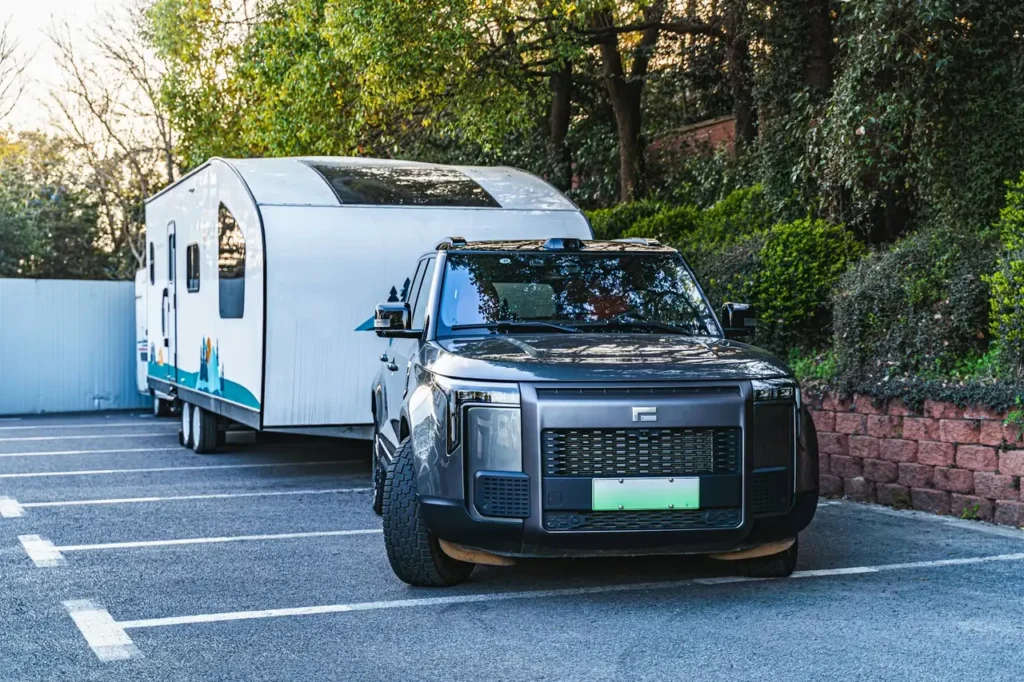
Quick Answer: The best RVs for long-term budget travel is a used travel trailer in the 20-26 ft range, paired with a capable tow vehicle you already own. Travel trailers carry no engine to maintain, depreciate more slowly than motorhomes, and can be left at a campsite while you drive your tow vehicle around, saving fuel every single day. For solo travellers or couples who want an all-in-one rig, a used Class B camper van is the runner-up thanks to 15-20 MPG fuel economy and low campground fees. The cheapest RVs to buy is rarely the cheapest to own, and that gap is exactly what this guide covers.
Key Takeaways
- Travel trailers cost $10,000,$50,000 new and have zero engine maintenance costs, making them the lowest total-cost option for most long-term travelers.
- Class B camper vans get 15-20 MPG but cost $80,000,$180,000 new; buying used under $30K changes the math significantly.
- Full-time RV living costs an estimated $1,500,$3,500/month all-in, compared to $3,000,$5,000+ for renting an apartment in most U.S. cities [5].
- Boondocking (free camping on public land) can cut campground costs from $800,$1,200/month to near zero for flexible travelers.
- A used RV under $20K with a solid pre-purchase inspection often delivers better value than a new budget RV with thin construction.
- Class A motorhomes get 6-10 MPG, at $4.00/gallon diesel, that’s $400,$667 per 1,000 miles driven, just in fuel.
- Insurance for full-time RVers runs $1,200,$3,000/year depending on RV type, coverage level, and driving history [4].
- The single biggest mistake first-time buyers make: buying too much RV (too large, too many slides, too many features) and then struggling with fuel, campsite access, and repair bills.

What Makes RVs Good for Long-Term Budget Travel?
The best RV for long-term budget travel balances a low purchase price, minimal ongoing maintenance, decent fuel efficiency (or no engine at all), and enough liveability to stay comfortable for months at a time. No single RV type wins on every metric, but you can rank them clearly once you define what “budget” means across a full year of travel. Read our guide on Best RVs for Solo Female Travelers.
Here’s what separates a genuinely affordable long-term rig from one that just looks cheap at the dealership:
- No (or simple) engine: Travel trailers have no drivetrain to maintain. That alone eliminates one of the biggest repair cost categories.
- Lightweight construction: Lighter trailers need less truck to tow them, which may mean you can use a vehicle you already own.
- Simple floor plan: Fewer slides, fewer appliances, fewer things to break. A basic layout with a queen bed, small kitchen, and wet bath is all most full-timers actually need.
- Good insulation: An RV with poor insulation forces you to run propane heat or AC constantly, adding $100,$300/month to operating costs in extreme climates.
- Strong resale value: Brands like Airstream, Oliver, and Casita hold value far better than budget brands. A $35K Airstream Bambi that sells for $28K in five years costs you far less than a $20K no-name trailer worth $4K at resale.
What Does It Really Cost to Live in an RV Full-Time?
Full-time RV living costs between $1,500 and $3,500 per month for most travelers, with the wide range driven by campground habits, fuel mileage, and how often you move [5]. Here’s a realistic monthly breakdown:
| Expense Category | Budget Traveler | Average Traveler |
|---|---|---|
| Campground/Parking | $200,$400 | $600,$1,000 |
| Fuel | $150,$300 | $400,$700 |
| Food & Groceries | $300,$500 | $500,$800 |
| RV Insurance | $100,$150 | $150,$250 |
| Maintenance/Repairs | $100,$200 | $200,$400 |
| Cell/Internet | $80,$150 | $100,$200 |
| Total (est.) | $930,$1,700 | $1,950,$3,350 |
According to full-time RV cost research, the average full-timer spends roughly $2,000,$2,500/month [6]. That’s significantly less than the U.S. median rent of $1,700+/month, before you add utilities, renter’s insurance, and parking [7].
The key lever is campground spending. Travelers who mix boondocking with paid sites can cut that line item by 50-70%.
Travel Trailers for Budget Travelers: The Low-Cost Workhorse
Travel trailers are the most cost-effective RV type for long-term budget travel. They start under $15,000 used, carry no engine maintenance burden, and give you the flexibility to unhitch and use your tow vehicle for daily errands, saving fuel every time you don’t move the whole rig. Read our guide on the Best RVs for Couples
Pros:
- Lowest purchase price of any livable RV ($10,000,$50,000 new; $8,000,$25,000 used)
- No engine, transmission, or drivetrain to maintain or repair
- Leave it parked; drive your truck or SUV for errands
- Wide variety of floor plans for couples, families, and solo travelers
- Easier to repair and modify (solar, water systems, storage upgrades)
Cons:
- Requires a capable tow vehicle (adds cost if you don’t own one)
- Setup and breakdown takes 15-30 minutes at each site
- Harder to access mid-drive (can’t walk to the back while moving)
- Maneuverability takes practice, especially backing into sites
Best budget travel trailer models to consider in 2026:
- Lance 1685, 2,849 lb dry weight, 16.8 ft, ideal for compact trucks. Strong build quality and excellent resale value.
- Airstream Bambi 16RB, Premium price (~$45K new) but exceptional resale; 10-year-old models still sell for $25K+.
- Forest River Flagstaff E-Pro 20BHS, Lightweight, under $22K new, aluminum frame, good for families.
- Jayco Jay Flight SLX 264BH, One of the best-selling budget trailers; solid warranty, wide dealer network. Check out our Jayco Jay Flight SLX 267BHS review for a detailed breakdown.
For more options in this price range, see our guide to best travel trailers under $40K.

Motorhomes for Budget Travelers: Convenience Has a Price
Motorhomes are convenient, everything is in one unit, you can walk around while parked, and setup is minimal. But that convenience costs real money in fuel, maintenance, and purchase price. Read our guide on Best RVs for Couples
Class A motorhomes (the big bus-style rigs) get 6-10 MPG and cost $100,000,$750,000+ new. Even used, you’re looking at $40,000,$80,000 for a decent unit. At 8 MPG and $4.00/gallon, driving 1,000 miles costs $500 in fuel alone. For long-term budget travellers, Class A is rarely the right call unless you’re buying a well-maintained used unit under $30K and plan to move infrequently. Read our guide on the Best RVs for Boondocking
Class C motorhomes are the middle ground, 10-14 MPG, $60,000,$150,000 new, and more manageable to drive than a Class A. A used Class C from a reputable brand (Winnebago, Thor, Coachmen) in the $25,000,$40,000 range can work well for full-timers who value the all-in-one convenience. Our guide to the best Class C motorhome covers the top models in detail.
Class B camper vans are the fuel-efficiency winner at 15-20 MPG, but new units cost $80,000,$180,000. Used Class B vans from 5-8 years ago can be found for $35,000,$60,000 and represent a strong long-term value if you’re a solo traveler or couple who moves frequently.
Is a Class B or Class C RV Better for Budget Travel?
For pure budget travel, a Class B wins on fuel and campground costs, but a Class C wins on livability per dollar spent. Here’s the direct comparison:
| Factor | Class B Van | Class C Motorhome |
|---|---|---|
| Fuel Economy | 15-20 MPG | 10-14 MPG |
| New Purchase Price | $80K,$180K | $60K,$150K |
| Used Price (good condition) | $35K,$65K | $25K,$50K |
| Sleeping Capacity | 2-3 | 4-6 |
| Stealth Camping | Excellent | Poor |
| Repair Complexity | Moderate | Moderate, High |
| Full-Time Livability | Tight | Comfortable |
Choose Class B if: You’re a solo traveler or couple, you move frequently, you want to park in cities or stealth camp, and fuel savings matter more than living space.
Choose Class C if: You need more sleeping space, you value a dedicated bathroom and kitchen, and you’re buying used in the $25K,$40K range where the value-per-square-foot is hard to beat.

RV MPG Comparison: Which Models Are Most Fuel-Efficient?
Fuel is one of the largest variable costs in long-term RV travel, and MPG differences compound dramatically over thousands of miles. Here’s a clear breakdown:
| RV Type | Typical MPG | Cost per 1,000 Miles (at $4.00/gal) |
|---|---|---|
| Travel Trailer (tow vehicle) | 10-15 (truck) | $267,$400 |
| Class B Camper Van | 15-20 | $200,$267 |
| Class C Motorhome | 10-14 | $286,$400 |
| Class A Gas | 6-10 | $400,$667 |
| Class A Diesel | 7-12 | $333,$571 |
A travel trailer towed by a half-ton truck gets roughly 12-14 MPG combined, comparable to a Class C, but with zero engine maintenance on the trailer itself. If you drive 15,000 miles per year, the difference between a Class B van (17 MPG avg) and a Class A gas motorhome (8 MPG avg) is roughly $2,647/year in fuel alone.
Best Used RVs for Budget Travelers Under $20K
Buying used is the single most effective way to reduce total RV ownership costs. New RVs depreciate 20-30% in the first year, buying a 2-3 year old unit lets someone else absorb that hit [2].
Best used RV picks under $20K in 2026:
- Used Casita Spirit Deluxe (2018-2021), Fiberglass shell, extremely durable, holds value well. Look for units in the $14,000,$19,000 range.
- Used Forest River R-Pod (2019-2022), Lightweight, easy to tow with a midsize SUV, good floor plans. Common used price: $12,000,$18,000.
- Used Winnebago Micro Minnie (2018-2021), Solid build, lightweight, aluminium frame. Used units: $15,000,$20,000.
- Used Class B (pre-2018 Roadtrek or Pleasure-Way), Older Class B vans can be found for $18,000,$25,000 and still deliver 17+ MPG.
Before buying any used RV, get a professional inspection. Water damage is the #1 hidden cost, soft floors, delaminated walls, and mold remediation can easily exceed $5,000,$15,000 in repairs. See our questions to ask when buying a used RV for a full inspection checklist.
For more options, our best used RV under $25K guide covers the top picks with current market pricing.
What Size RV Is Best for Full-Time Living on a Budget?
For full-time living, the sweet spot is 20-26 feet for couples and 24-30 feet for small families. Longer rigs cost more to fuel, require more campsite space (limiting your options), and are harder to maneuver into free boondocking spots.
Here’s the size trade-off:
Under 20 ft:
- Pros: Fits almost anywhere, lightest tow weight, easiest to maneuver
- Cons: Cramped for full-time living, limited storage, no slide-outs
- Best for: Solo travelers, weekend warriors, minimalist full-timers
20-26 ft:
- Pros: Comfortable for 1-2 people full-time, fits most campgrounds, manageable tow weight
- Cons: Limited for families, may feel tight in winter when you’re stuck inside
- Best for: Couples, solo travelers who want more comfort
27-32 ft:
- Pros: Comfortable for families, room for a real kitchen and workspace
- Cons: Heavier tow requirements, limited campsite access, higher fuel cost
- Best for: Families, full-timers who stay put for weeks at a time
Pro tip: A 24 ft travel trailer without slides is often more livable than a 28 ft trailer with one slide, because the slide takes up floor space when retracted and adds a major leak/failure point over time.
RV Boondocking vs. Campgrounds: Which Saves More Money?
Boondocking (camping on free public land managed by the BLM or U.S. Forest Service) saves $400,$900/month compared to staying at paid campgrounds full-time. That’s $4,800,$10,800 per year, enough to pay for a decent used travel trailer. Please Read our guide on the Best RVs for winter travels
Paid campground costs:
- State/national park campgrounds: $20,$40/night
- Private RV parks with hookups: $35,$75/night
- Monthly RV park rates: $400,$1,200/month depending on location
Boondocking costs:
- BLM land, National Forests: Free (14-day limit per spot)
- Harvest Hosts (wineries, farms): ~$99/year membership
- Thousand Trails membership: $500,$800/year for unlimited stays at network campgrounds
A realistic budget traveler’s mix: 50% boondocking + 25% state parks + 25% private parks = roughly $300,$500/month in campground costs. That’s the sweet spot between comfort and savings.
For boondocking, you’ll want solar panels (400W minimum), a lithium battery bank (100-200Ah), and a composting toilet or large holding tanks. Our guide to the best RV for boondocking covers the top setups in detail.
How to Reduce RV Operating Costs and Maintenance Expenses
The biggest operating cost reductions come from smart buying decisions made before you purchase, not from cutting corners after the fact.
Before you buy:
- Choose a rig with a strong dealer network (Jayco, Winnebago, Forest River have dealers in most states)
- Avoid units with multiple slides, each slide adds ~$500,$2,000 in potential repair costs per incident
- Buy a model known for quality construction, thin walls and cheap hardware fail fast under full-time use
- Get a pre-purchase inspection from a certified RV technician (NRVIA-certified inspectors charge $300,$500 and can save you thousands)
After you buy:
- Learn basic maintenance: reseal roof seams annually ($50 in materials), check tire pressure weekly, inspect slide seals monthly
- Join an RV club (Good Sam, Escapees) for roadside assistance and campground discounts, typically $50,$150/year
- Use a campground membership or mix in free camping to cut site fees
- Add solar early, a 400W solar kit ($600,$1,200 installed) eliminates generator fuel costs and opens up free boondocking sites
- Cook in the RV instead of eating out, this alone saves $400,$800/month for most travelers
For a full cost and financing overview, see our RV costs and financing guide.
RV vs. Van for Budget Travel: Which Is Actually Cheaper?
For long-term budget travel, a travel trailer beats a converted van on total cost in most scenarios, but a van beats everything else on flexibility and stealth.
| Factor | Travel Trailer + Truck | Converted Van | Class B Van |
|---|---|---|---|
| Total Setup Cost (used) | $15K,$35K | $20K,$60K | $35K,$80K |
| Fuel Cost/Year (15K miles) | $4,000,$5,500 | $2,500,$3,500 | $3,000,$4,000 |
| Maintenance/Year | $500,$1,500 | $800,$2,000 | $1,000,$2,500 |
| Campground Flexibility | Good | Excellent | Excellent |
| Full-Time Livability | Best | Tight | Moderate |
| Stealth Camping | Poor | Excellent | Good |
A converted van (DIY build) is the cheapest option if you already own a suitable van and do the build yourself. But for most buyers without van-building skills, a used travel trailer in the $12,000,$20,000 range paired with a truck they already own is the most affordable path to long-term travel.
RV Insurance Costs for Full-Time Travel: Best RVs for Long-Term Budget Travel
Full-time RV insurance costs $1,200,$3,000/year for most travelers, with the rate depending on RV type, value, your driving record, and whether you declare full-time residency [4]. Here’s a rough breakdown by RV type:
- Travel trailer (full-time): $800,$1,500/year
- Class B camper van: $1,200,$2,200/year
- Class C motorhome: $1,500,$2,500/year
- Class A motorhome: $2,000,$4,000/year
Standard auto insurance does not cover full-time RV living. You need a policy that includes full-timer coverage (treats the RV as your primary residence), personal liability, and total loss replacement if the RV is less than 5 years old.
Good Sam, Progressive, and National General are the most commonly used full-time RV insurers. Get quotes from at least three before committing.

Can You Really Save Money Living in an RV Long-Term?
Yes, but only if you’re disciplined about campground costs and don’t move constantly. Full-time RV living costs $1,500,$3,500/month all-in for most travelers, compared to $3,000,$5,000+ for renting in a mid-sized U.S. city [7]. The savings are real, but they depend on three factors:
- How often you move: Every move costs fuel. Moving twice a week at 100 miles per move adds $1,600,$2,400/year in fuel for a Class C motorhome.
- Where you camp: Staying at full-hookup RV resorts every night eliminates most of the cost advantage. Mixing in free camping is essential.
- What you bought: A $120,000 Class A motorhome financed at 7% APR adds $1,100+/month in loan payments before you spend a dollar on fuel.
The travelers who genuinely save money living in an RV are those who buy a used rig outright (or with a small loan), mix free and paid camping, and stay in one area for weeks at a time rather than driving daily.
Seasonal Weather Performance and Climate Suitability
Most budget RVs are not built for year-round use in extreme climates. This is a major gap that costs first-time buyers real money, they buy a three-season trailer, then spend $2,000,$5,000 retrofitting it for winter or desert summer use.
What to look for:
- Insulation R-value: A true 4-season RV has R-11 or higher in walls and R-40+ in the roof. Budget trailers often have R-7 walls and R-19 roofs, fine for spring/fall, inadequate for Montana winters or Arizona summers.
- Enclosed and heated underbelly: Protects water lines from freezing. Essential for any travel below 20°F.
- Dual-pane windows: Reduces condensation and heat loss significantly.
- Ducted heating: Forced-air furnaces with ducted vents heat the whole rig, including under-floor spaces.
If you plan to travel year-round across the U.S., look at purpose-built 4-season trailers like the Lance 2285, Arctic Fox 25Y, or Keystone Montana. Our guide to the best 4-season travel trailers covers the top options with insulation specs.
For winter-specific travel, see our best RV for winter travel guide.
Cheapest Places to Park an RV for Extended Stays: Best RVs for Long-Term Budget Travel
Free and low-cost parking options exist across the U.S. and can cut your campground budget dramatically:
- BLM (Bureau of Land Management) land: Free dispersed camping, 14-day limit. Concentrated in the West, Nevada, Arizona, New Mexico, Utah, Colorado. BLM’s recreation page has a map tool.
- U.S. National Forests: Free dispersed camping in most forests, 14-day limit. USDA Forest Service lists all forest recreation areas.
- Walmart/Cracker Barrel parking lots: Free overnight stays allowed at many locations (always call ahead to confirm).
- Casino parking lots: Many casinos allow free overnight RV parking to encourage gambling foot traffic.
- Harvest Hosts: ~$99/year for access to 3,000+ farms, wineries, and breweries that allow one-night stays.
- Long-term RV parks (monthly rates): In lower cost-of-living areas (rural Texas, New Mexico, Florida panhandle), monthly rates of $350,$600 with full hook-ups are common.
For destination-specific camping ideas, check out our best RV camping in New Mexico guide, one of the most affordable boondocking states in the country.
What RV Problems Should You Watch Out for Before Buying?
Water damage is the #1 hidden cost in used RV buying, and it’s present in an estimated 30-40% of used units on the market. Here’s what to inspect before signing anything:
Critical inspection points:
- Roof seams and seals, Press along every seam. Soft spots mean water intrusion.
- Floor flex near entry, bathroom, and slide edges, Soft or spongy floors = rot.
- Wall delamination, Run your hand along exterior walls. Bubbling or waviness = moisture between layers.
- Under-sink and around toilet, Check for black mold, soft subfloor, or rust.
- Slide-out seals, Cracked or missing seals are a $200 fix that, if ignored, becomes a $3,000 problem.
- Tire age, RV tires should be replaced every 5-7 years regardless of tread. Check the DOT date code on the sidewall.
- Battery condition, Test under load, not just voltage. A dead battery bank is $300,$1,500 to replace.
Always hire an NRVIA-certified inspector for any used RV purchase over $10,000. The NRVIA inspector directory lets you search by state.
Best RVs for Long-Term Budget Travel: Our Top Picks by Traveler Type
Here’s the bottom line, organized by who you are and what you need:
Solo traveler on a tight budget:
Best pick: Used Class B van ($30K,$50K) or used lightweight trailer under $15K + midsize SUV. The van wins on fuel and flexibility; the trailer wins on living space and cost.
Couples full-timing for the first time:
Best pick: Used 22-24 ft travel trailer ($15K,$25K) with a simple floor plan, queen bed, dinette, wet bath, small kitchen. No slides preferred. See our best RV for couples guide for model-specific picks.
Families with kids:
Best pick: Used 28-32 ft travel trailer with bunkhouse ($20K,$35K) or a used Class C motorhome ($25K,$45K). Check our best bunkhouse RV guide for family-friendly floor plans.
First-time RVers on a strict budget:
Best pick: Used Forest River R-Pod, Winnebago Micro Minnie, or Airstream Bambi in the $12K,$20K range. Simple, reliable, easy to tow, strong resale. Our best budget RV under $30K guide has current market picks.
Remote workers / digital nomads:
Best pick: Used 24-26 ft travel trailer with good solar potential and a dedicated workspace. Pair with a Starlink satellite internet setup ($120/month) for true location independence. See our best RV for full-time working travelers for work-from-RV setups.
Interactive Tools: RV Cost Calculator, Quiz & Comparison
Use the tools below to estimate your monthly RV costs, find your ideal RV type, and compare options side by side.
RV Budget Travel Tools
Estimate your monthly RV living cost:
First-Time Buyer Mistakes to Avoid
These are the most common and costly errors first-time RV buyers make, and how to sidestep them:
- Buying too large: A 38 ft Class A sounds luxurious until you can’t get into half the campgrounds you want, and you’re paying $600/month in fuel just to move.
- Skipping the inspection: Buying a used RV without a professional inspection is the #1 way to inherit someone else’s $8,000 water damage problem.
- Underestimating tow capacity: Your truck’s tow rating is not the same as its payload capacity. A truck rated to tow 10,000 lbs may only have 1,200 lbs of payload, and a loaded 28 ft trailer can easily exceed that. Always check the door jamb sticker for GVWR and payload.
- Buying new when used is better: New RVs depreciate 20-30% in year one [2]. A 2-year-old unit at 70% of new price is almost always the smarter buy.
- Ignoring the floor plan: A floor plan that works for a weekend trip may feel like a prison after 60 days. Walk through the RV and simulate cooking, sleeping, and working before buying.
- Not budgeting for repairs: Budget $1,000,$2,000/year for maintenance and unexpected repairs, even on a newer used unit. Things break. It’s not a question of if, it’s when.
Conclusion: The Best RVs for Long-Term Budget Travel Is the One You Can Afford to Keep Running
After comparing every major RV type on purchase price, fuel, maintenance, insurance, and campground costs, the winner for most long-term budget travelers is clear: a used travel trailer in the 20-26 ft range, purchased outright or with a small loan, paired with a tow vehicle you already own.
That combination delivers the lowest total monthly cost, the most flexibility in where you park, and the fewest mechanical surprises, because there’s no engine to fail.
If you don’t own a tow vehicle and don’t want to buy one, a used Class C motorhome in the $25,000,$40,000 range is the next best option. And if you’re a solo traveler who moves frequently and values stealth and fuel economy above all else, a used Class B van is worth the higher entry price.
Your next steps:
- Set your total budget (purchase + first year operating costs)
- Decide on traveler type (solo, couple, family) and use the quiz above
- Search used listings on RVTrader, Craigslist, and Facebook Marketplace for your target model
- Hire an NRVIA-certified inspector before any purchase over $10,000
- Get at least 3 insurance quotes before finalizing your purchase
- Read our RV costs and financing guide to understand loan options and total ownership math
The RV life can genuinely be more affordable than renting, but only if you make smart decisions at the start. Take your time, buy used, buy simple, and keep moving.
FAQ
What are the best RVs for long-term budget travel?
A used travel trailer in the 20-26 ft range is the best RV for long-term budget travel for most people. It has no engine to maintain, costs $8,000,$25,000 used, and lets you unhitch and use your tow vehicle for errands, saving fuel every day you don’t move the whole rig.
Is a travel trailer cheaper than a motorhome for full-time living?
Yes, in almost every cost category. Travel trailers cost less to buy, have no engine maintenance, and depreciate more slowly than motorhomes. The only scenario where a motorhome wins on cost is if you don’t own a tow vehicle and would need to buy one.
What is the cheapest RV to live in full-time?
The cheapest RV to live in full-time is a used lightweight travel trailer (under $15,000) or a used pop-up camper (under $8,000). However, very cheap units often lack the insulation and durability needed for year-round full-time use.
How much does long-term RV living cost per month?
Full-time RV living costs $1,500,$3,500/month all-in for most travelers, including campground fees, fuel, food, insurance, and maintenance [5]. Budget travelers who boondock frequently can get closer to $1,200,$1,800/month.
What RVs has the lowest operating costs?
Travel trailers have the lowest operating costs because they have no engine to fuel or maintain. Among motorized RVs, Class B camper vans have the lowest fuel costs at 15-20 MPG.
Is it cheaper to travel in an RV or stay in hotels long-term?
RV travel is significantly cheaper than hotels for trips longer than 2-3 weeks. A hotel averaging $100,$150/night costs $3,000,$4,500/month, more than double the cost of full-time RV living for most travelers.
What size travel trailer is best for a couple full-timing?
A 20-24 ft travel trailer without slides is the sweet spot for couples. It’s comfortable for two people, fits most campgrounds, and is light enough to tow with a half-ton truck.
How do I find free camping for long-term RV travel?
Use the BLM’s recreation map for free dispersed camping on public land, the Freecampsites.net database, and apps like iOverlander and The Dyrt. A Harvest Hosts membership ($99/year) adds 3,000+ farm and winery stays.
What should I inspect before buying a used RV?
Focus on: roof seams and seals, floor softness near entry and bathroom, wall delamination, under-sink moisture, slide-out seal condition, tire age (DOT date code), and battery condition under load. Hire an NRVIA-certified inspector for any purchase over $10,000.
Can I really save money living in an RV vs. renting an apartment?
Yes, if you buy used, avoid financing a large loan, and mix free camping with paid sites. Full-time RV living averages $2,000,$2,500/month [6], compared to $3,000,$5,000+ for renting in most U.S. cities [7].

References
[1] RV Cost Statistics – https://tooltroopers.com/blogs/tooltroopers/rv-cost-statistics
[2] RV Ownership Cost – https://latestcost.com/rv-ownership-cost/
[3] How Much Does It Really Cost To Own An RV 2026 Breakdown – https://truervs.com/blog/how-much-does-it-really-cost-to-own-an-rv-2026-breakdown/
[4] RV Insurance Quote Calculator – https://usecalcpro.com/finance/rv-insurance-quote-calculator
[5] Full Time RV Living Cost Breakdown 2026 – https://rvcostcalculator.com/blog/full-time-rv-living-cost-breakdown-2026
[6] Full Time RV Living On A Budget Practical Guide For 2025 – https://rvlivingnow.com/full-time-rv-living-on-a-budget-practical-guide-for-2025/
[7] Is Full Time RV Living Cheaper Than Owning A Home In 2025 A Real Cost Comparison – https://www.thewildrx.com/2025/12/is-full-time-rv-living-cheaper-than-owning-a-home-in-2025-a-real-cost-comparison/


